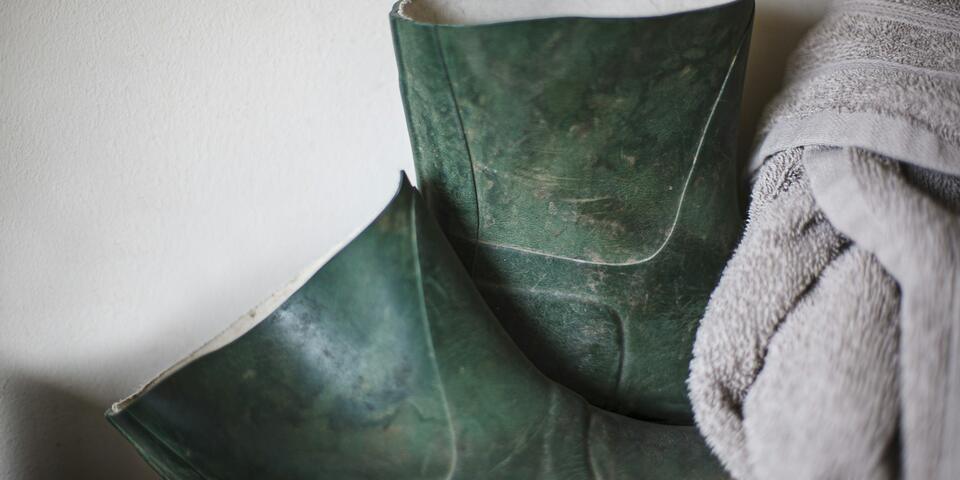
Rubber Boots & Waders
A fondness for rubber boots and waders: glossy wellies, splashing through puddles and the snug squeak of rubber on rubber.
What it is
Rubber boots blend the look and smell of rubber with muddy outdoor fun. Enthusiasts might love tall classic rain boots, thigh-high hip waders, chest waders with shoulder straps, high-gloss fashion wellies or heavy-duty work boots. The sound of squelching through mud, the shine after a downpour and the snug fit around the calf all have their fans.
For some, the boots are the whole point: their shape, their color, the way they pull on and off. For others, they're part of a bigger scene that includes raincoats, wet weather, puddles and mess. Waders add a full-body element, since they cover most of the wearer in thick, waterproof rubber or neoprene.
The interest overlaps naturally with general boot appreciation, latex and rubber, mud play and wet-and-messy fun.
Why people enjoy it
- The smell, sheen and squeak of rubber are strong sensory pleasures.
- Splashing in puddles taps into carefree, playful energy.
- Waders and tall boots create a striking, practical silhouette.
- Getting muddy while staying dry inside the boots is a fun contrast.
- Rugged outdoor associations, from farms and festivals to fishing trips, add a down-to-earth character.
How people explore it
- Rainy-day walks in a favorite pair of wellies, with puddles fully encouraged.
- Collecting boots in different heights, colors and finishes.
- Mud or messy play in a backyard or other private outdoor space, with the boots as the star.
- Pairing boots with raincoats or full waterproof outfits for a complete look.
- Photo sessions focused on gloss, reflections and splashes.
Terminology
- Wellies
- British nickname for Wellington boots, the classic knee-high rubber rain boot.
- Waders
- Waterproof boots joined to legs or overalls, reaching the hip or chest, used for fishing and work in water.
- Wading belt
- A belt cinched around the waist of chest waders to slow water from rushing in after a fall.
- Gumboots
- A common name for rubber boots in Australia, New Zealand and South Africa.
A little history
The Wellington boot takes its name from the first Duke of Wellington, who popularized a close-fitting leather boot in the early 1800s. Once rubber could be made durable through vulcanization, rubber versions followed and became essential for farmers, soldiers in muddy trenches and anyone walking in the rain. Fans of rubber boots have gathered in online communities for decades, often alongside rubber and messy-play enthusiasts.
Consent & safety
Consent
Agree in advance on any messy play, how messy it gets and where it happens. Stomping through puddles together is lovely; splashing or muddying someone who hasn't agreed to get wet is not, and the same goes for touching boots someone is wearing.
Safety tips
- Waders can fill with water if you fall in deep or moving water, making it very hard to stand, swim or get out. That is a real drowning risk, so never wade beyond knee depth for play, always wear a wading belt and never go in alone.
- Never combine waders or boots with any restraint near water.
- Rubber boots trap moisture, so dry your feet and the boots afterward to avoid fungal problems and blisters.
- Wet rubber soles are slippery on tiles and smooth floors; put down towels or mats indoors.
- Check outdoor spots for broken glass, deep mud and sudden drop-offs before stomping around.
Risks to know about
- Drowning if waders fill with water after a fall.
- Slips and twisted ankles on wet or muddy ground.
- Athlete's foot and skin irritation from damp, sweaty boots.
- Rubber or latex allergy in sensitive people.
New to all this? Read our consent & safety basics.